- Universal Rackets
- Posts
- What To Do When the Ball Is Hit at Your Feet | Spring Clinics Start Now | No More Match Nerves
What To Do When the Ball Is Hit at Your Feet | Spring Clinics Start Now | No More Match Nerves
Universal Rackets Weekly Pickleball Update: Coaching - News - Tips
In partnership with

Men, Say Goodbye to Eyebags, Dark Spots & Wrinkles

Reduce eyebags, dark spots and wrinkles with the first of its kind anti-aging solution for men.
Based on advanced dermatological research, Particle Face Cream helps keep your skin healthy and youthful, ensuring you look and feel your best every day.
Get 20% off and free shipping now with the exclusive promo code BH20!
Universal Rackets Weekly Update!
Let’s Talk About Your Pickleball Game…
🔑 Key Takeaways
🏓 Handle Balls at Your Feet Better
📏 Use Your Paddle as a Measuring Stick
🌸 Spring Philly Area Programs Start This Weekend
👟 Drill of the Week: 3-Step Pro DIY Forehand Sequence
💧 Hydration = Performance
🚲 Use the “Gear Shift” Match Strategy
🏕️ Junior Tennis & Pickleball Camps Are Open
⚡ Lesson of the Week: Double Your Hand Speed
What To Do When The Ball Is Hit At Your Feet
When your opponent hits a good drop or aggressive dink at your feet, it often leads to one thing:
A pop-up.
And once the ball pops up, you’re usually in trouble.
So how do you handle balls at your feet without popping them up?
The first thing to understand is direction.
Most players bend at their waist instead of bending with their legs. When this happens, their paddle moves downward, which causes the ball to go upward.
Instead, focus on getting low with your legs and hitting forward — not upward. When you match the height of the ball and swing forward, you keep the ball under control.
Once you’re set, there are two ways to handle the ball:
• Take it out of the air
• Take it off the bounce
Taking It Out of the Air
If the ball is reachable, taking it out of the air can simplify the shot. The key is keeping your paddle out in front.
Many players make the mistake of reaching their paddle toward the ball instead of keeping the paddle stable and letting the ball come to them.
Think of your paddle as a measuring stick:
If the ball is in front of your paddle, take it off the bounce.
If the ball is at or behind your paddle, take it out of the air.
Taking It Off the Bounce
If the ball lands at your feet, the number one priority is creating space.
If the ball gets too close to your body, you’ll get jammed — and that’s when pop-ups happen.
Think about a normal dink: you want the ball out in front of your body, with your arm extended.
But if the ball is at your feet, how do you get it out in front?
You move your body back.
The closer the ball is to your feet, the farther back you must adjust.
To do this correctly
Anchor into your back leg, let your weight settle into that back foot, stay balanced, and then finish forward through the ball.
Players pop balls up because they:
• Don’t move
• Fall backward
• Lose their balance
Instead, create space, stay stable, and finish forward.
The Bottom Line
When the ball is at your feet, the key questions are:
Are you taking it out of the air or off the bounce?
By using your paddle as a measuring stick, adjusting your body to create space, and focusing on hitting forward instead of upward, you’ll pop fewer balls up and win more points.
Bonus: once you learn how to create space, you’ll also set yourself up to add speed-ups at higher levels.
🌸 Spring Pickleball Philly Area Programs Kick Off This Weekend!
More Programs. More Locations. More Opportunities to Play.
Universal Rackets is excited to launch our Spring 2026 Pickleball programming — and we’re officially getting started this weekend!
Our programs are designed for players of all ages and skill levels and built around fun, structure, competition, and real improvement.
Here’s what’s included this season:
✅ Adult Clinics
✅ Junior Clinics
✅ Pickleball & Tennis Summer Camps
✅ DUPR Rating Clinics
✅ Competitive Tournaments
✅ Indoor & Outdoor Options
✅ Multiple Skill Levels
✅ Weekday & Weekend Offerings
Whether you’re just getting started, looking to improve your rating, or ready to compete in tournaments, our structured programs are built to help you play smarter, move better, and gain confidence on the court.
Spots are filling quickly as spring kicks off — secure yours today.
👟 Drill of the Week: 3 Step Pro Level DIY Forehand Sequence
Stay Hydrated: The Key to Peak Performance on the Pickleball Court
As temperatures rise and matches get more intense, hydration becomes one of the most important factors for maintaining peak performance on the pickleball court.
When you become dehydrated, your body can experience fatigue, muscle cramps, slower reaction times, and reduced focus — all of which can negatively affect your game.
Here’s how to stay properly hydrated so you can perform your best on court.
1. Why Hydration Matters
Hydration plays a critical role in regulating your body temperature, lubricating your joints, and delivering nutrients to your muscles.
When you sweat during physical activity, your body loses both water and electrolytes. If those fluids aren’t replaced, energy levels drop and your risk of overheating increases.
Even mild dehydration can reduce athletic performance.
2. Start Hydrating Before You Play
Don’t wait until you step on the court to start drinking water.
Begin hydrating a few hours before your match so your body is prepared for the physical demands of play.
A good guideline is to drink 16–20 ounces of water about 2–3 hours before playing.
This gives your body enough time to absorb the fluids and prepare for activity.
3. Hydrate During Play
During matches, take small sips of water regularly rather than waiting until you feel thirsty.
Drinking during breaks or between games helps maintain steady hydration levels.
For longer matches or hot conditions, consider adding an electrolyte drink to replace the salts and minerals lost through sweat. Look for options that are lower in sugar and contain electrolytes like sodium, potassium, and magnesium.
4. Know the Signs of Dehydration
Recognizing dehydration early can help prevent performance drops or health issues.
Common signs include:
• Thirst
• Dry mouth
• Headaches
• Dizziness
• Fatigue
If you notice these symptoms, take a break, find shade if possible, and hydrate immediately.
5. Rehydrate After Your Match
Hydration shouldn’t stop when the match ends.
Continue drinking fluids after play to help your body recover and restore what was lost through sweat.
Pairing water or electrolytes with a recovery snack that includes protein and carbohydrates can help replenish energy and support muscle recovery.
6. Listen to Your Body
Everyone’s hydration needs are different. Temperature, humidity, intensity of play, and your individual sweat rate all impact how much fluid you need.
Pay attention to your body and adjust your hydration accordingly.
Staying properly hydrated helps you stay sharp, maintain endurance, and reduce the risk of fatigue or injury — allowing you to play your best every time you step on the court.
Universal Rackets influencer @pickleballwithtyler recently met with Dr. Mafdali from Baptist Health to learn more about hydration for pickleball players.
No More Nerves During Competitive Pickleball: Steal This Strategy
Many beginner and intermediate players make the same mistake when a competitive match starts.
They come out full swinging.
The moment the match begins, they try to play like a pro — ripping drives, aiming for perfect lines, and trying to hit every ball as hard as possible.
What happens next?
Unforced errors.
Missed serves.
Missed returns.
Missed drops.
When you set the bar too high at the start of a match, the only direction things can go is down.
Instead, approach pickleball matches like riding a mountain bike.
Start in Gear 1
When you first start riding a bike, you begin in gear 1.
As you build momentum, you shift to gear 2, then gear 3, and eventually work your way up to higher gears.
But what happens when you hit a hill or encounter resistance?
You downshift.
Maybe you drop back to gear 2.
Maybe even back to gear 1.
Then once you regain speed, you shift up again.
Pickleball should be approached the same way.
Upshift and Downshift During the Match
When you’re feeling confident and consistent, upshift.
Increase speed.
Increase precision.
Take more aggressive shots.
But if you miss a few shots in a row — serves, returns, drops — it’s time to downshift.
Take pace off the ball.
Add more margin.
Focus on consistency.
Once your rhythm returns, you can gradually increase the level again.
Sometimes You Don’t Need Top Gear
One of the biggest mistakes players make is thinking they need to play at maximum intensity all the time.
But the reality is that some matches can be won in gear 2 or gear 3.
Even professional players manage their gears.
Think of Ben Johns playing a first-round match against a qualifier.
He might never need to go above gear 2.
But when Johns plays someone like Tyson McGuffin in a final, he may have to shift all the way up to gear 10.
Great players don’t start at full speed.
They build up to it when needed.
Why This Reduces Nerves
If you struggle with nerves during matches, this strategy can completely change your mindset.
Instead of feeling like you need to hit every shot perfectly right away, you allow yourself to ease into the match.
Confidence builds through consistency.
You’ll feel much better:
• Making 20 returns at 70% power
than
• Missing 10 out of 20 returns at 100% power
You’ll gain far more confidence:
• Making 90% of your drops with margin
than
• Trying to be perfect and hitting half of them into the net
The Bottom Line
Start slow.
Build momentum.
Upshift when you’re playing well.
Downshift when you need control.
Try this strategy in your next match and you’ll notice two things:
You’ll feel less nervous, and you’ll win more points.
Program Spotlight: JUNIOR TENNIS & PICKLEBALL SUMMER CAMPS ARE HERE!
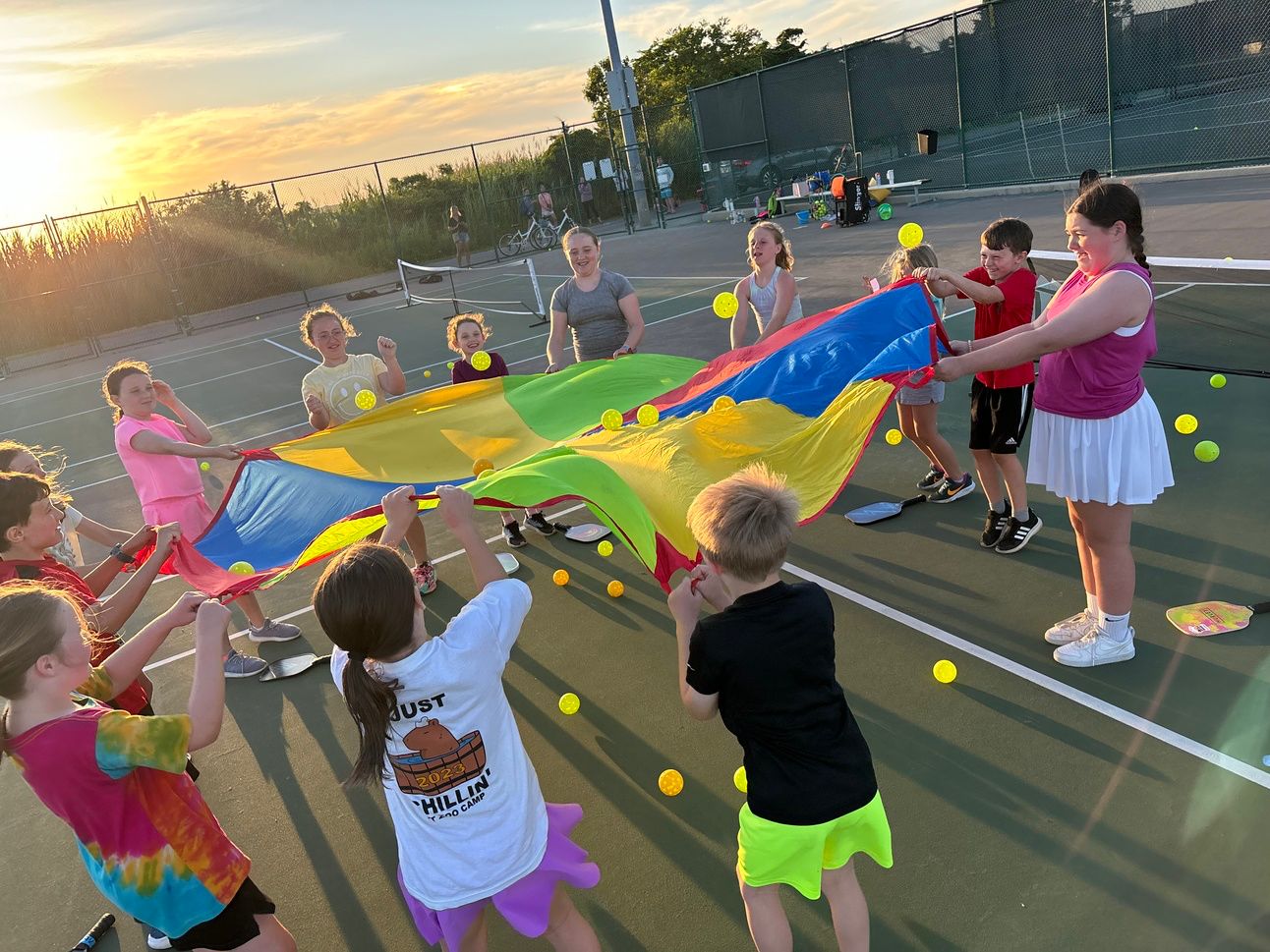
Summer is coming fast — and our Junior Tennis & Pickleball Summer Camps are officially open for registration!
Universal Rackets summer camps are designed to do more than just keep kids active. Our camps focus on skill development, confidence, teamwork, and FUN, all in a structured, positive environment led by professional coaches.
Whether your child is brand new to the sport or already competing, our camps meet them where they are and help them level up — both on and off the court.
What to Expect at Universal Rackets Summer Camps:
• Tennis & Pickleball options
• Ages grouped by age and skill level
• Beginner → Advanced instruction
• High-energy drills, games, and point play
• Emphasis on fundamentals, movement, and sportsmanship
• A fun, welcoming environment kids love
Our coaches create an experience that keeps kids engaged, learning, and excited to come back each day — while parents can feel confident their child is in great hands.
📍 Multiple Locations Available
📅 Weekly & Multi-Week Options
🎾 Tennis & Pickleball Camps Offered
Spots fill quickly every summer — especially beginner and prime-time sessions.
Lesson of the Week: How To Double Your Hand Speed In Pickleball
Thank you for reading and we can’t wait to see you on court!
-Universal Rackets